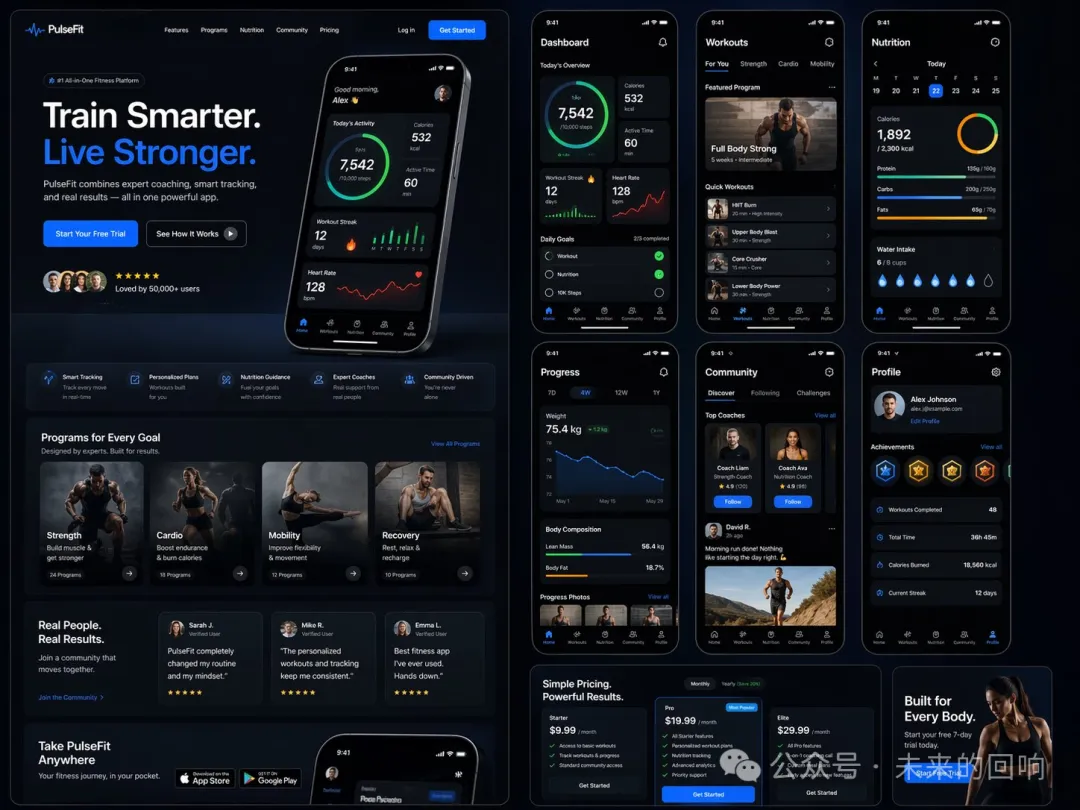
Design a modern, high-end fitness app landing page and product UI for a brand called PulseFit.
Create a clean web design mockup that looks like a real SaaS fitness platform and mobile companion app. The design should feel premium, motivating, and easy to use, with a polished UI/UX style similar to top-tier health and wellness apps.
Include:
A hero section with bold headline, short subheadline, strong call-to-action button, and app preview
Dashboard UI showing daily activity, calories burned, workout streak, heart rate, step count, and progress rings
Workout program cards for strength, cardio, mobility, and recovery
Nutrition tracking section with macro breakdown and water intake
Progress charts and analytics widgets
Trainer/community section with profile cards and testimonials
Pricing section and download/app store callout
Mobile app screens shown alongside the web design for a cohesive product ecosystem
Style direction:
Sleek, minimal, modern interface
Premium fitness brand aesthetic
Smooth spacing, strong hierarchy, rounded cards, soft shadows
Dark mode UI with energetic accent colors like electric blue, neon green, or vibrant orange
Crisp typography, realistic charts, polished buttons, beautiful onboarding feel
Highly detailed, dribbble-worthy, startup-quality product design
Realistic UX case study presentation, not a cartoon or illustration
Composition:
Full website homepage mockup
Multiple UI sections visible in one polished presentation
Slight perspective or straight-on product showcase
Clean background with subtle gradients and professional lighting
Ultra-detailed, sharp text rendering, visually balanced layout
Output: A stunning, realistic UI/UX design concept for a fitness app website and dashboard that looks ready for development. Make it look like a real Figma product design presentation for a premium startup.

中文版

為名為 PulseFit 的品牌設計一個現代化、高端的健身應用着陸頁和產品界面。
創建一個乾淨的網頁設計樣板,看起來像真正的 SaaS 健身平台和移動配套應用。設計應當感覺高檔、激勵且易用,界面/用戶體驗風格應當精緻,類似於頂級健康與養生應用。
包括:
- 帶有加粗標題、簡短副標題、強有力的行動號召按鈕和應用預覽的英雄版塊
- 儀表盤界面顯示每日活動量、消耗的卡路里、連續鍛鍊、心率、步數和進度環
- 力量、有氧、靈活性和恢復的鍛鍊計劃卡
- 營養追蹤部分,包含宏量營養素分解和水分攝入量
- 進展圖表和分析小工具
- 培訓師/社區版塊,配有個人資料卡和推薦信
- 定價部分及下載/應用商店標識
- 移動應用界面與網頁設計並列展示,打造一個連貫的產品生態系統

風格方向:
- 簡潔、簡潔、現代化的界面
- 高端健身品牌美學
- 間距平滑,層級分明,圓潤的牌,柔和的陰影
- 暗黑模式界面,帶有充滿活力的點綴色,如電光藍、霓虹綠或鮮豔橙色
- 字體清晰,圖表逼真,按鈕精緻,入門手感極佳
- 高度細緻、值得自行操作、初創級的產品設計
- 逼真的用戶體驗案例展示,而非漫畫或插圖

組成:
- 完整網站主頁模擬版
- 在一個精緻演示中顯示多個界面部分
- 輕視或正面展示產品
- 背景乾淨,漸變細膩,燈光專業
- 極細緻、清晰的文本渲染,視覺平衡的佈局

輸出:
一個令人驚豔、逼真的健身應用網站和儀表盤界面/用戶體驗設計概念,看起來已準備好開發。

讓它看起來像是為高端初創公司的真實 Figma 產品設計演示。
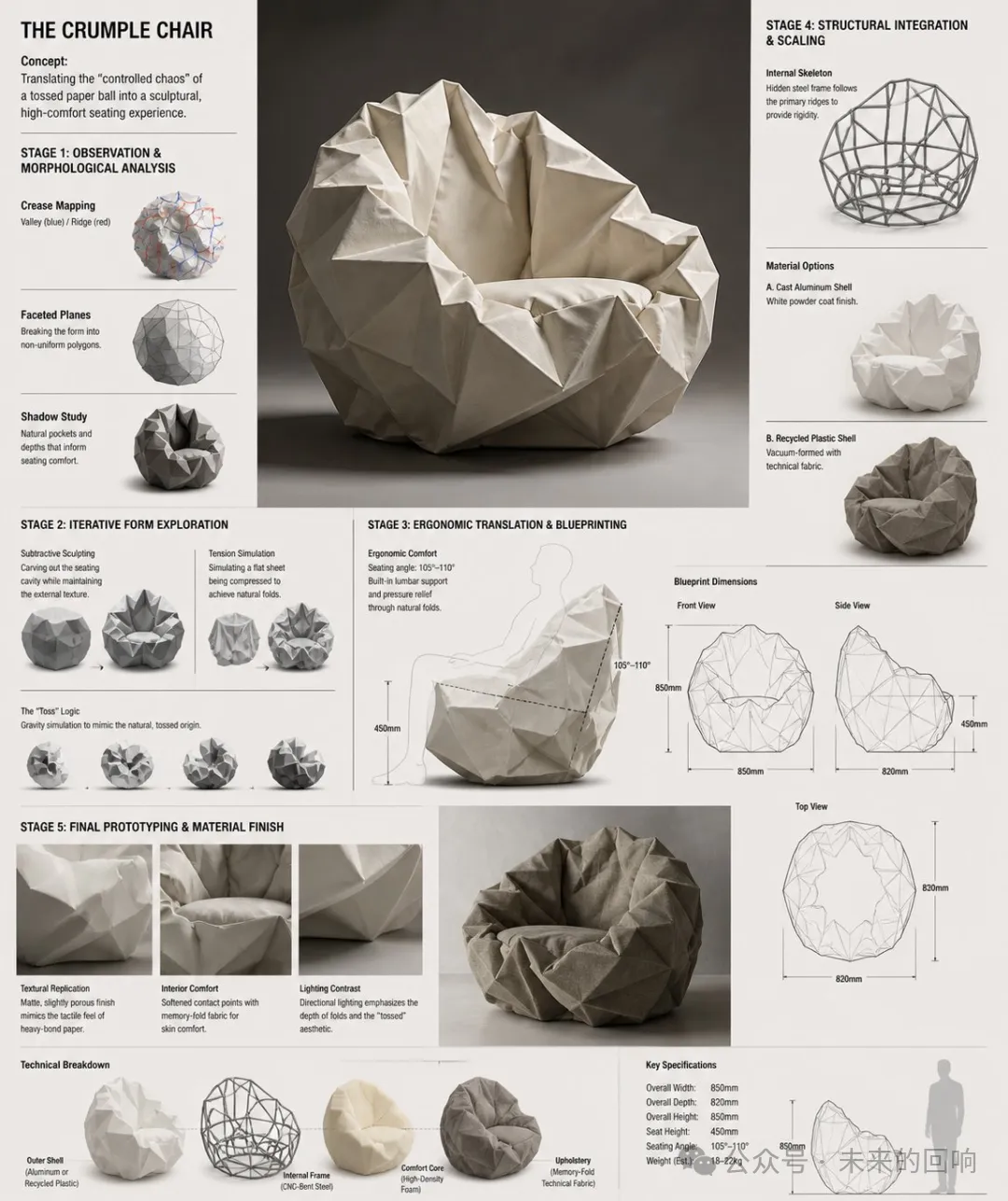
Design Concept: The Crumple Chair Core Philosophy: Translating the "controlled chaos" of a tossed paper ball into a sculptural, high-comfort seating experience.
Stage 1: Observation & Morphological Analysis The goal is to deconstruct the image of the crumpled paper into usable geometric data. Crease Mapping: Identify the primary "valley" and "ridge" lines. These represent potential structural ribs or seams in the chair. Faceted Planes: Break down the sphere into a series of non-uniform polygons. Each flat surface of the paper becomes a potential panel for the chair’s upholstery or shell. Shadow Study: Analyze how the "tossed" form creates deep recesses. These natural pockets guide where the user’s weight will be cradled.
Stage 2: Iterative Form Exploration Moving from a sphere to a seat through "Digital Crumpling." Subtractive Sculpting: Imagine the paper ball as a solid mass. Use Boolean operations to "carve out" a seating cavity that fits the human form while maintaining the external jagged texture. Tension Simulation: Use 3D software (like Rhino or Blender) to simulate a flat sheet of material being compressed. This ensures the folds look authentic and not "modeled." The "Toss" Logic: Experiment with gravity-based simulation dropping a digital mesh to see how it settles naturally, mimicking the "tossed" origin.
Stage 3: Ergonomic Translation & Blueprinting Refining the raw aesthetic into a functional object. The Comfort Core: Overlay a standard ergonomic template (Seating Angle: 105°–110°) over the crumpled form. Adjust the internal "folds" to provide lumbar support and pressure relief. Blueprint Generation: Create technical orthographic views (Front, Side, Top). Map out the dimensions: Seat Height: 450mm Total Width: 850mm Surface Smoothing: Maintain the sharp "paper edges" on the exterior shell while softening the interior contact points for skin comfort.
Stage 4: Structural Integration & Scaling Making the concept physically viable. The Skeleton: Design a hidden internal frame (likely CNC-bent steel rods or a 3D-printed lattice) that follows the most prominent ridges of the paper folds to provide rigidity. Material Selection: * Option A (High-End): Faceted, cast aluminum with a white powder coat. Option B (Soft): Vacuum-formed recycled plastic shell covered in "memory-fold" technical fabric that retains a wrinkled appearance.
Stage 5: Final Prototyping & Material Finish Textural Replication: Apply a matte, slightly porous finish to the material to mimic the tactile feel of heavy-bond paper. Lighting Contrast: Use directional studio lighting in the final renders to emphasize the "tossed" shadows, making the chair look like a giant piece of discarded inspiration. Design Tip: To keep the "tossed" look authentic, avoid symmetry. The most compelling aspect of a crumpled paper ball is its unique irregularity—ensure the left and right sides of the chair are balance-equivalent but not identical

中文版

設計理念:Crumple Chair 核心理念:將一個被拋擲的紙球的“受控混亂”轉化為雕塑感十足、高舒適度的座椅體驗。
第一階段:觀察與形態分析 目標是將揉皺紙張的圖像分解為可用的幾何數據。摺痕映射:識別主要的“谷”線和“脊線”。這些代表椅子上的潛在結構肋或接縫。多面:將球體拆分為一系列非均勻多邊形。紙張的每一個平面都成為椅子軟墊或外殼的潛在面板。影子研究:分析“拋擲”形態如何形成深層凹陷。這些天然口袋引導用戶的體重將被託在哪裏。
第二階段:迭代形態探索 通過“數字揉皺”從球體到座位。減法雕刻:把紙球想象成一個實心的質量。使用布爾運算“開鑿”一個適合人體形態的座位空腔,同時保持外部鋸齒紋理。張力模擬:使用 3D 軟件(如 Rhino 或 Blender)模擬一塊平面材料被壓縮。這樣可以確保褶皺看起來真實,而不是“建模”。“拋擲”邏輯:嘗試基於重力的模擬,將數字網格放下,觀察其自然沉降,模擬“拋擲”的原點。
第三階段:人體工學翻譯與藍圖 將原始美學精煉為功能性物品。舒適核心:在皺巴巴的模具上疊加標準人體工學模板(座椅角度:105°–110°)。調整內部“褶皺”以提供腰部支撐和壓力緩解。藍圖生成:創建技術正字視圖(正面、側面、頂部)。繪製尺寸圖:座椅高度:450毫米 總寬度:850毫米 表面平滑:保持外殼外側鋒利的“紙質邊緣”,同時軟化內部接觸點以增加皮膚舒適度。
第四階段:結構整合與規模化 使概念在物理上可行。骨架:設計一個隱藏的內部框架(很可能是 CNC 彎曲鋼棒或 3D 打印格柵),沿着紙張摺疊最明顯的脊線排列,以提供剛性。材料選擇:* 選項 A(高端):多面鑄鋁,外覆白色粉末塗層。選項 B(軟質):真空成型的再生塑料外殼,外覆“記憶摺疊”技術織物,保持皺褶外觀。
第五階段:最終原型製作及材料表面處理 紋理複製:在材料上塗上啞光、略帶孔隙的塗層,以模擬厚粘紙的觸感。光影對比:在最終渲染中使用定向工作室燈光,突出“拋擲”的陰影,使椅子看起來像一塊巨大的被丟棄靈感。設計小貼士:為了保持“拋接”的真實感,避免對稱。揉皺紙球最吸引人的特點是其獨特的不規則性——確保椅子左右兩側平衡等效但不完全相同
Design a modern, high-end fitness app landing page and product UI for a brand called PulseFit.
Create a clean web design mockup that looks like a real SaaS fitness platform and mobile companion app. The design should feel premium, motivating, and easy to use, with a polished UI/UX style similar to top-tier health and wellness apps.
Include:
A hero section with bold headline, short subheadline, strong call-to-action button, and app preview
Dashboard UI showing daily activity, calories burned, workout streak, heart rate, step count, and progress rings
Workout program cards for strength, cardio, mobility, and recovery
Nutrition tracking section with macro breakdown and water intake
Progress charts and analytics widgets
Trainer/community section with profile cards and testimonials
Pricing section and download/app store callout
Mobile app screens shown alongside the web design for a cohesive product ecosystem
Style direction:
Sleek, minimal, modern interface
Premium fitness brand aesthetic
Smooth spacing, strong hierarchy, rounded cards, soft shadows
Dark mode UI with energetic accent colors like electric blue, neon green, or vibrant orange
Crisp typography, realistic charts, polished buttons, beautiful onboarding feel
Highly detailed, dribbble-worthy, startup-quality product design
Realistic UX case study presentation, not a cartoon or illustration
Composition:
Full website homepage mockup
Multiple UI sections visible in one polished presentation
Slight perspective or straight-on product showcase
Clean background with subtle gradients and professional lighting
Ultra-detailed, sharp text rendering, visually balanced layout
Output: A stunning, realistic UI/UX design concept for a fitness app website and dashboard that looks ready for development. Make it look like a real Figma product design presentation for a premium startup.

中文版

為名為 PulseFit 的品牌設計一個現代化、高端的健身應用着陸頁和產品界面。
創建一個乾淨的網頁設計樣板,看起來像真正的 SaaS 健身平台和移動配套應用。設計應當感覺高檔、激勵且易用,界面/用戶體驗風格應當精緻,類似於頂級健康與養生應用。
包括:
- 帶有加粗標題、簡短副標題、強有力的行動號召按鈕和應用預覽的英雄版塊
- 儀表盤界面顯示每日活動量、消耗的卡路里、連續鍛鍊、心率、步數和進度環
- 力量、有氧、靈活性和恢復的鍛鍊計劃卡
- 營養追蹤部分,包含宏量營養素分解和水分攝入量
- 進展圖表和分析小工具
- 培訓師/社區版塊,配有個人資料卡和推薦信
- 定價部分及下載/應用商店標識
- 移動應用界面與網頁設計並列展示,打造一個連貫的產品生態系統

風格方向:
- 簡潔、簡潔、現代化的界面
- 高端健身品牌美學
- 間距平滑,層級分明,圓潤的牌,柔和的陰影
- 暗黑模式界面,帶有充滿活力的點綴色,如電光藍、霓虹綠或鮮豔橙色
- 字體清晰,圖表逼真,按鈕精緻,入門手感極佳
- 高度細緻、值得自行操作、初創級的產品設計
- 逼真的用戶體驗案例展示,而非漫畫或插圖

組成:
- 完整網站主頁模擬版
- 在一個精緻演示中顯示多個界面部分
- 輕視或正面展示產品
- 背景乾淨,漸變細膩,燈光專業
- 極細緻、清晰的文本渲染,視覺平衡的佈局

輸出:
一個令人驚豔、逼真的健身應用網站和儀表盤界面/用戶體驗設計概念,看起來已準備好開發。

讓它看起來像是為高端初創公司的真實 Figma 產品設計演示。
Design Concept: The Crumple Chair Core Philosophy: Translating the "controlled chaos" of a tossed paper ball into a sculptural, high-comfort seating experience.
Stage 1: Observation & Morphological Analysis The goal is to deconstruct the image of the crumpled paper into usable geometric data. Crease Mapping: Identify the primary "valley" and "ridge" lines. These represent potential structural ribs or seams in the chair. Faceted Planes: Break down the sphere into a series of non-uniform polygons. Each flat surface of the paper becomes a potential panel for the chair’s upholstery or shell. Shadow Study: Analyze how the "tossed" form creates deep recesses. These natural pockets guide where the user’s weight will be cradled.
Stage 2: Iterative Form Exploration Moving from a sphere to a seat through "Digital Crumpling." Subtractive Sculpting: Imagine the paper ball as a solid mass. Use Boolean operations to "carve out" a seating cavity that fits the human form while maintaining the external jagged texture. Tension Simulation: Use 3D software (like Rhino or Blender) to simulate a flat sheet of material being compressed. This ensures the folds look authentic and not "modeled." The "Toss" Logic: Experiment with gravity-based simulation dropping a digital mesh to see how it settles naturally, mimicking the "tossed" origin.
Stage 3: Ergonomic Translation & Blueprinting Refining the raw aesthetic into a functional object. The Comfort Core: Overlay a standard ergonomic template (Seating Angle: 105°–110°) over the crumpled form. Adjust the internal "folds" to provide lumbar support and pressure relief. Blueprint Generation: Create technical orthographic views (Front, Side, Top). Map out the dimensions: Seat Height: 450mm Total Width: 850mm Surface Smoothing: Maintain the sharp "paper edges" on the exterior shell while softening the interior contact points for skin comfort.
Stage 4: Structural Integration & Scaling Making the concept physically viable. The Skeleton: Design a hidden internal frame (likely CNC-bent steel rods or a 3D-printed lattice) that follows the most prominent ridges of the paper folds to provide rigidity. Material Selection: * Option A (High-End): Faceted, cast aluminum with a white powder coat. Option B (Soft): Vacuum-formed recycled plastic shell covered in "memory-fold" technical fabric that retains a wrinkled appearance.
Stage 5: Final Prototyping & Material Finish Textural Replication: Apply a matte, slightly porous finish to the material to mimic the tactile feel of heavy-bond paper. Lighting Contrast: Use directional studio lighting in the final renders to emphasize the "tossed" shadows, making the chair look like a giant piece of discarded inspiration. Design Tip: To keep the "tossed" look authentic, avoid symmetry. The most compelling aspect of a crumpled paper ball is its unique irregularity—ensure the left and right sides of the chair are balance-equivalent but not identical

中文版

設計理念:Crumple Chair 核心理念:將一個被拋擲的紙球的“受控混亂”轉化為雕塑感十足、高舒適度的座椅體驗。
第一階段:觀察與形態分析 目標是將揉皺紙張的圖像分解為可用的幾何數據。摺痕映射:識別主要的“谷”線和“脊線”。這些代表椅子上的潛在結構肋或接縫。多面:將球體拆分為一系列非均勻多邊形。紙張的每一個平面都成為椅子軟墊或外殼的潛在面板。影子研究:分析“拋擲”形態如何形成深層凹陷。這些天然口袋引導用戶的體重將被託在哪裏。
第二階段:迭代形態探索 通過“數字揉皺”從球體到座位。減法雕刻:把紙球想象成一個實心的質量。使用布爾運算“開鑿”一個適合人體形態的座位空腔,同時保持外部鋸齒紋理。張力模擬:使用 3D 軟件(如 Rhino 或 Blender)模擬一塊平面材料被壓縮。這樣可以確保褶皺看起來真實,而不是“建模”。“拋擲”邏輯:嘗試基於重力的模擬,將數字網格放下,觀察其自然沉降,模擬“拋擲”的原點。
第三階段:人體工學翻譯與藍圖 將原始美學精煉為功能性物品。舒適核心:在皺巴巴的模具上疊加標準人體工學模板(座椅角度:105°–110°)。調整內部“褶皺”以提供腰部支撐和壓力緩解。藍圖生成:創建技術正字視圖(正面、側面、頂部)。繪製尺寸圖:座椅高度:450毫米 總寬度:850毫米 表面平滑:保持外殼外側鋒利的“紙質邊緣”,同時軟化內部接觸點以增加皮膚舒適度。
第四階段:結構整合與規模化 使概念在物理上可行。骨架:設計一個隱藏的內部框架(很可能是 CNC 彎曲鋼棒或 3D 打印格柵),沿着紙張摺疊最明顯的脊線排列,以提供剛性。材料選擇:* 選項 A(高端):多面鑄鋁,外覆白色粉末塗層。選項 B(軟質):真空成型的再生塑料外殼,外覆“記憶摺疊”技術織物,保持皺褶外觀。
第五階段:最終原型製作及材料表面處理 紋理複製:在材料上塗上啞光、略帶孔隙的塗層,以模擬厚粘紙的觸感。光影對比:在最終渲染中使用定向工作室燈光,突出“拋擲”的陰影,使椅子看起來像一塊巨大的被丟棄靈感。設計小貼士:為了保持“拋接”的真實感,避免對稱。揉皺紙球最吸引人的特點是其獨特的不規則性——確保椅子左右兩側平衡等效但不完全相同